
When anxiety starts to rear its ugly head, often its the reactions I get from other people that get me to realize it. Why? I shout. Not a yell, or scream.. but a shout.
My voice is raised and I am abrupt, and talk way to fast and forcefully almost like a verbal bulldozer because I need any conversation to stop. I need quiet.
It turns out this is a real thing!
My bestie first taught me about this over a decade ago, when he noticed I shout when I’m ‘stressed’. Although he did his best to explain the physical chain reaction that causes it during anxiety, I was too stand off-ish to listen at the time. Luckily the internet is an endless resource these days, so google away at all the articles about it.
Here is one from an actual research study by actual doctors about Noise Annoyance Associated with Depression and Anxiety
The result of the noise study? “Depression and anxiety increased with the degree of overall noise annoyance. Compared to no annoyance, prevalence ratios for depression, respectively anxiety increased from moderate to extreme annoyance.”
The team at The Anxiety Center have a great post about hypersensitivity and anxiety. which beautifully explains such symptoms – how anxiety triggers the stress response, which triggers heightened senses as part of the fight or flight response.
No matter how you slice it, noise and anxiety do not mix.
What can you go to help manage anxiety and noise?
1. Ear plugs
I keep a paid of pretty sweet titanium ones in my desk. They are discreet and allow me to still hear people, but really help cut down the irritating harshness and reduce general noise vibrations in the room. Its like putting ear muffs on. Its my first go-to for quiet.
2. Headphones
Ear buds, noise cancelling, either work great. Sometimes just having them on will curb noises, but if you choose to listen to music, then be smart about your selection. I have a playlist of Jen’s ‘settle down now’ music. Its pretty much all classic soul, but you do you 😉
3. Close the door
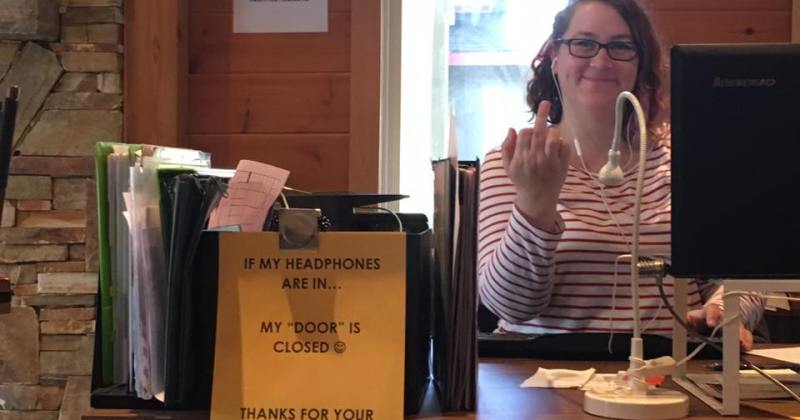
I don’t always have a door to my office. I’ve had to put signs up asking for space. Full disclosure, it rarely works. People don’t notice it or ignore it even if my office mates are running interference. If you are lucky enough to get a door, close it. Even part way.
4. Get some headspace
I love the Headspace app, or find any version of guided meditation that you connect with. I’ll admit that at first try I thought meditation was awkward, but anything that is a catalyst for managing anxiety is a good thing in my book! Call it a “time out”, take a breath, go for walk… you can’t deny all the awesome mental, emotion and physical benefits meditation offers. Find your own version, there is no wrong way to do it.
5. Avoid stimulation
Off hours are as key to managing anxiety. Do something quiet, whatever floats your boat. Coloring books, a warm bath, or a wander in a park are all ways to help us settle our minds after a stimulating work day. Loud places, events, noisy activities or adding stimulants like alcohol or caffeine are a bad idea. Resist the urge to do what the crew might be off doing – YOU need to take care of yourself. Be smart about your wellness!


 It was though our journey that I realized anxiety takes on many forms, and manifests itself in countless ways. I began talking talking about my experiences and soon realized that I am not alone. Moreover, I learned how rampant mental-health issues are in the industry and dove deeper into understanding the ecosystems we live in, and the symbiotic effect they have on our mental health. I was fortunate enough to be introduced with a counselor who helped me identify my triggers, which emotions are reasonable and expected vs. which are manipulated by anxiety. Essentially, learning to cope, while recognizing when things get beyond my control. I learned to ask for help.
 S.A.F.E on SET